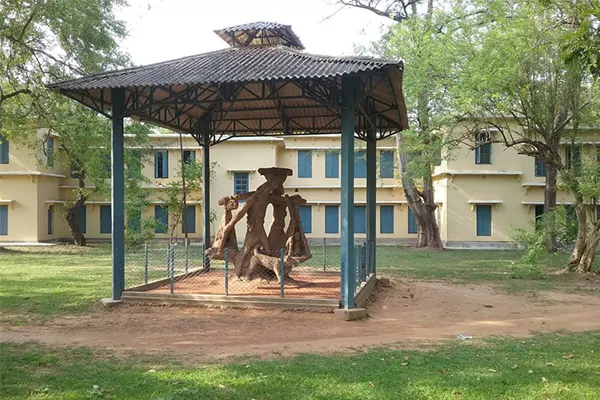
Nearby Places to visit
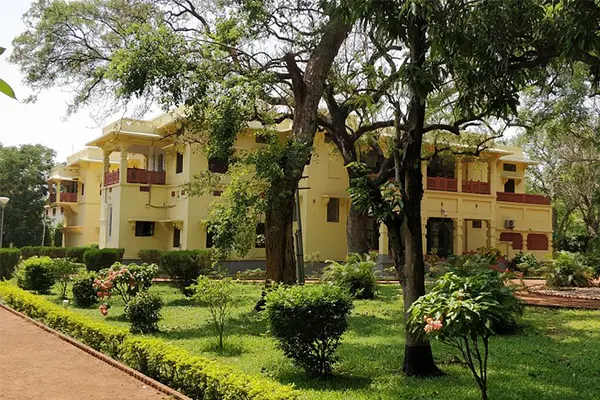
Visva-Bharati University was founded by Rabindranath Tagore in 1921 as a place “where the world makes a home in a single nest,” blending Indian traditions with global learning. Known for its open-air classes under trees and its emphasis on the arts and humanities, it houses renowned institutes like Kala-Bhavana (fine arts) and Sangeet-Bhavana (music), alongside Sriniketan for rural reconstruction. Recognized as a Central University and Institution of National Importance in 1951, its Santiniketan campus was inscribed as a UNESCO World Heritage Site in 2023.
- 2.5 km from Abhilasha
Kala-Bhavana, the fine arts faculty of Visva-Bharati was founded under Rabindranath Tagore’s vision and shaped by masters like Nandalal Bose, Benode Behari Mukherjee, and Ramkinkar Baij; it became a cradle of modern Indian art. Known for its open-air studios and learning-by-doing approach, Kala-Bhavana blends painting, sculpture, printmaking, design, and murals with craft and community life—think Bose’s Haripura posters, Benode Behari’s murals, and Ramkinkar’s iconic Santal sculptures. It remains a living campus where tradition and experimentation meet.
- 2.5 km from Abhilasha
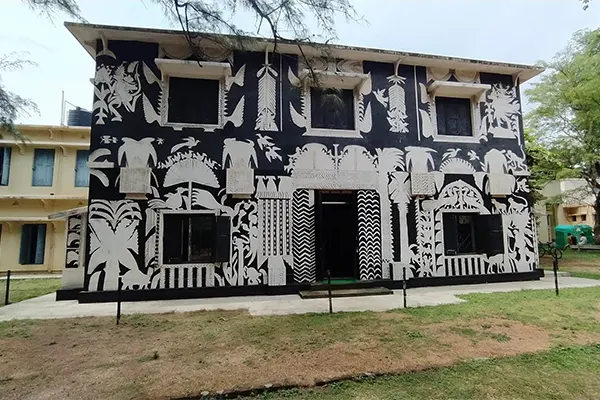
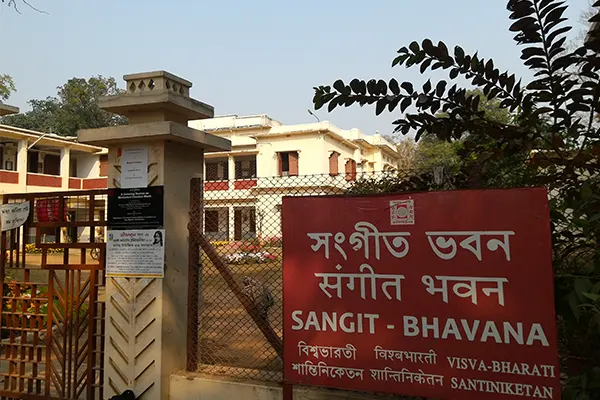
Sangeet Bhavana is Visva-Bharati’s music and performing arts faculty. It teaches Hindustani classical, Rabindra Sangeet, folk traditions, choral work, dance (including Rabindra-nritya-natya), and instrumental music (sitar, sarod, esraj, tabla). True to Tagore’s ethos, classes often spill into open courtyards and campus festivals—Basanta Utsav, Poush Mela, weekly baithaks—where students perform as part of community life. Guided historically by maestros like Dinendranath Tagore and Shailajaranjan Majumdar, and enriched by alumni such as Kanika Banerjee and Suchitra Mitra, Sangeet Bhavana remains a hub where tradition and experimentation meet in song, rhythm, and dance.
- 2.5 km from Abhilasha
Patha Bhavana is the school at Santiniketan that Rabindranath Tagore began in 1901 (as the Brahmacharyāśram), later becoming part of Visva-Bharati. Classes are famously held in the open air under trees, reflecting Tagore’s belief that learning should be close to nature and free from rote. The curriculum blends academics with arts, crafts, music, seasonal festivals (like Brikshāropan and Halākarshan), community work, and the dignity of labour—shaping curious, socially rooted, and creative learners.
- 2.5 km from Abhilasha
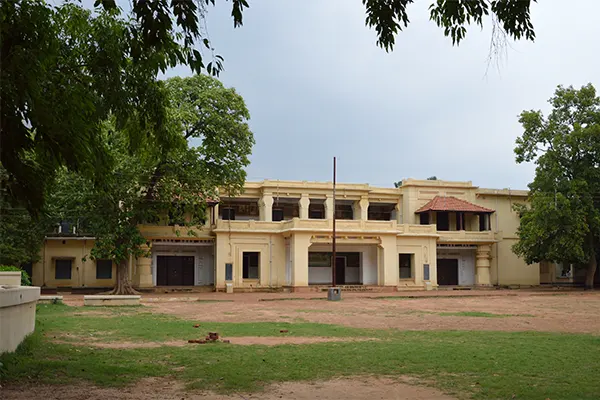
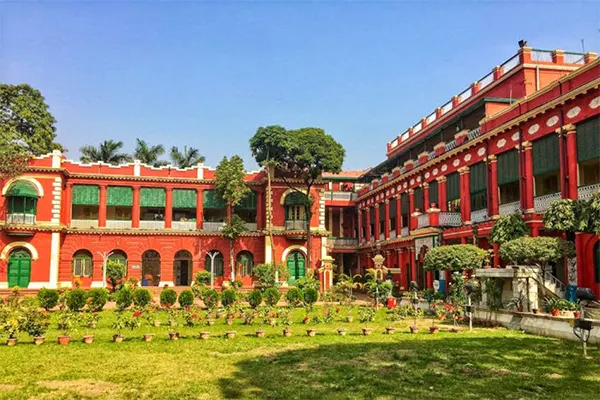
The Rabindra Bhaban Museum is made up of 5 houses. Names of five houses are Pratichi, Konark, Punocho, Raktakorobi, and Shyamoli. These are the names of his literature, which have named his houses. Rabindranath Tagore has spent a significant part of his life, and not only that, but a lot of his great work has also been produced here. Rabindra Bhaban Museum has 40,000 books and 12,000 journals, and it also preserves the poet’s photographs, memories, images, and objects. It is one of Santiniketan’s most exciting and must-visitable places, and photography is prohibited here.
- 2.5 km from Abhilasha
Surul Rajbari, also called Sarkar Bari/Boro Bari is an 18th-century zamindar mansion in Surul village near Santiniketan/Sriniketan, built by the merchant-landholder Srinivas Sarkar, whose wealth grew through East India Company trade. The estate is noted for its cluster of exquisitely carved terracotta temples around the courtyard and for a Durga Puja tradition said to be over 250 years old. Today it’s a popular heritage stop a few kilometres from Bolpur, offering a vivid glimpse of Birbhum’s zamindari architecture and art.
- 5.8 km from Abhilasha
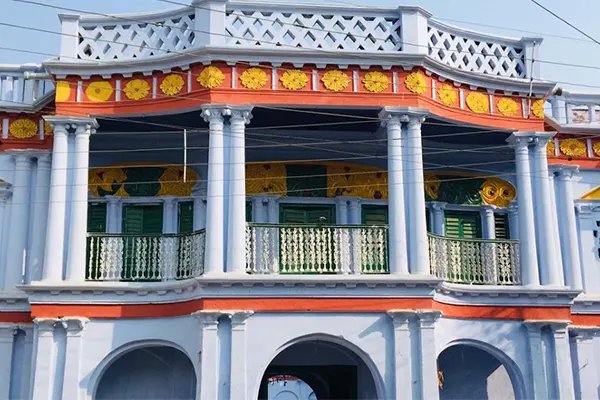
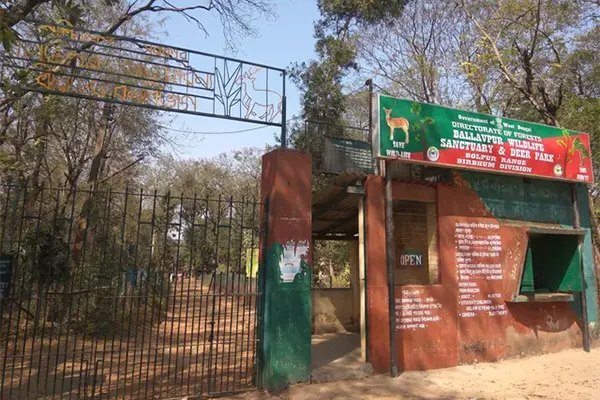
Ballavpur Wildlife Sanctuary, popularly called Deer Park lies just outside Santiniketan and protects dry lateritic woodland dotted with ponds that draw large flocks of wintering waterbirds. Visitors often spot herds of spotted deer (chital) wandering freely, along with peafowl, jackals, and a rich mix of resident and migratory birds. Quiet trails, watchtowers, and the sanctuary’s serene lakes make it a favourite short nature escape from the Visva-Bharati campus
- 4.4 km from Abhilasha
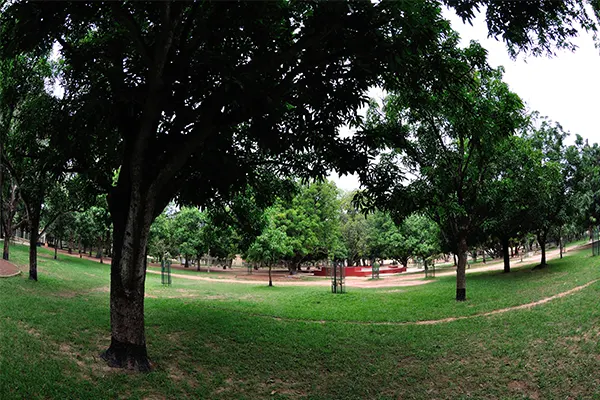
Amrakunja, literally “mango grove” is an open-air orchard space in Santiniketan where Tagore’s nature-centric schooling comes alive. Shaded by old mango trees with simple seating and a low earthen stage, it has long served as a venue for Patha Bhavana classes, morning prayers, rehearsals, and seasonal festivals like Brikshāropan and Halākarshan. Visva-Bharati has also used Amrakunja for convocations and cultural gatherings, making it a living symbol of learning in harmony with nature.
- 2.5 km from Abhilasha
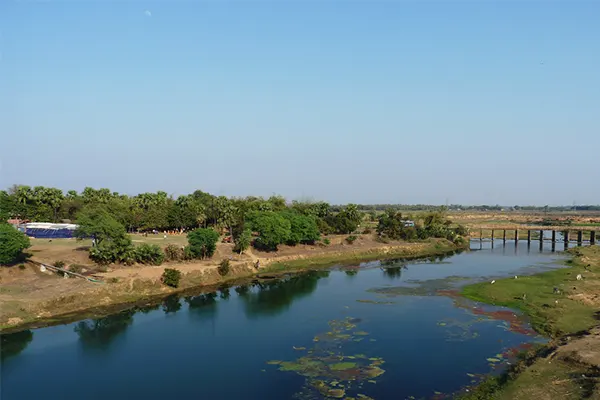
Kopai River (locally “Khowai”) meanders past Santiniketan through red lateritic country, carving the distinctive khowai ravines that shape the area’s landscape. Shallow in summer and rain-swollen in monsoon, it runs by Sonajhuri woods and the Saturday Khoai haat, with autumn kash grasses lining its banks. The river and its eroded cliffs appear often in Santiniketan lore and Tagore’s writings, giving the campus its rustic, poetic backdrop.
It is described by Rabindranath Tagore as follows –
amader chhoto nadi chale banke banke
baisakh mase taar haatu jal thake
“Our small stream moves forward in bends and curves
In the month of Baisakh it only has knee deep waters”
- 4.2 km from Abhilasha
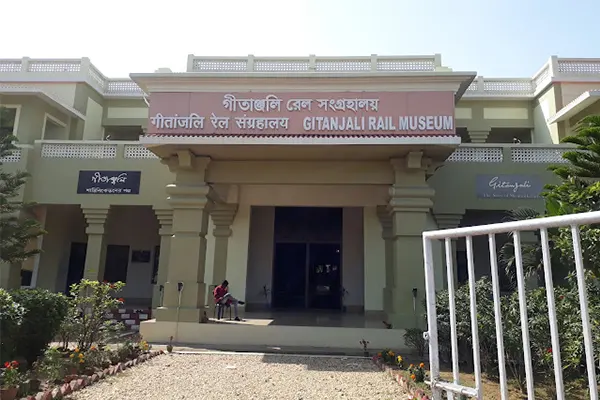
Gitanjali Rail Museum is about 3 kilometres from Viswa-Bharati premises and right next to Bolpur Station. It is the Indian Railways’ famous museum. This museum has very rich information about Rabindranath Tagore and Viswa-Bharati.
This museum is full of unknown information and images of Rabindranath. You can see Rabindranath’s armchair and a table and find many histories of Rabindranath and Santiniketan on the large museum’s first floor.
Inside the walls are beautiful craftsmanship and frescoes of Plaster of Paris. Here is the special Saloon Coach of the railways, by which Rabindranath left Santiniketan forever in July 1941.
- 4.4 km from Abhilasha
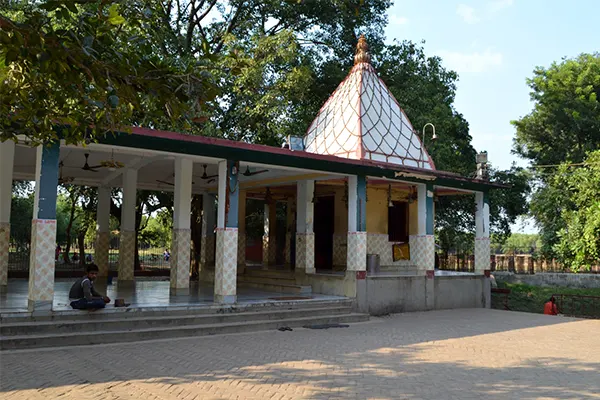
Kankalitala Temple is a revered Shakti Peetha associated with the Sati legend (locally believed to mark where a part of Sati’s body fell). Set by the Kopai River, the modest complex centers on a sanctum and an old banyan-shaded courtyard with a sacred kund, drawing steady pilgrim footfall—especially on amavasya and during Navaratri. Quiet and understated, it’s a popular half-day spiritual stop for Santiniketan visitors.
- 4.6 km from Abhilasha
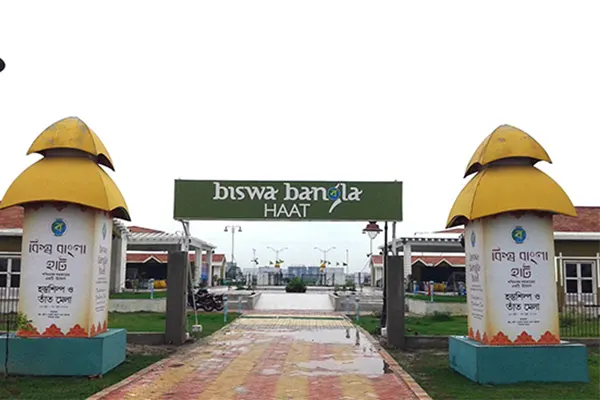
Biswa Bangla hat in Santiniketan is a new travel destination for tourists and shopping lovers. It is near the PRANTIK station. Here, you get a wide range of handmade art and craft products, all unique in style. The product or art, like jute bags, painted umbrellas, hand-painted sarees, other tribal paintings, wooden and clay sculptures, etc., is mind-blowing
- 500 mts from Abhilasha
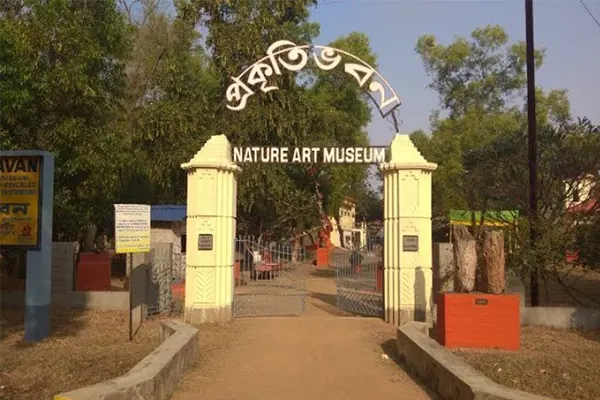
Prakriti Bhavan – Nature Art Museum in Santiniketan is a quiet, private museum dedicated to art that grows out of nature—think driftwood, roots, stone, terracotta, and outdoor land-art installations. Set around a leafy courtyard and sculpture garden, it hosts rotating exhibitions, small performances, and artist baithaks, encouraging viewers to see materials of the Birbhum landscape as living media. It’s a serene stop for lovers of eco-art just minutes from the main campus.
- 3.5 km from Abhilasha
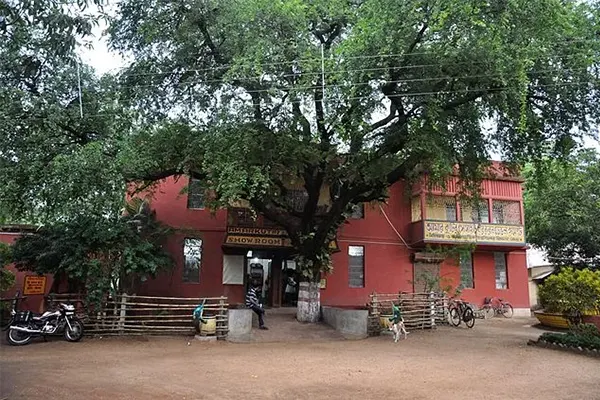
Amar Kutir near Santiniketan is a renowned rural crafts cooperative that grew from a 1920s freedom-fighters’ refuge into a hub for Bengal’s hand-made arts. Visitors come for leather emboss work, batik, kantha, dokra metal, bamboo/shola, and khadi—all made by local artisans trained through the cooperative. Set near Sriniketan by the Kopai countryside, it’s both a shopping stop and a living showcase of Tagore-inspired rural uplift and craft revival.
- 6 km from Abhilasha
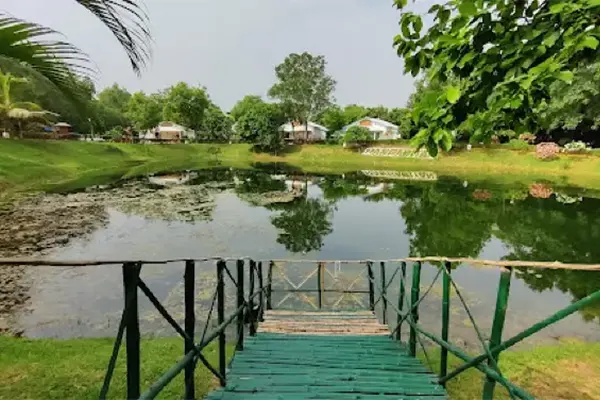
Amar Kutir Eco-Tourism Park sits near Sriniketan by the Kopai countryside, a landscaped green space tied to the Amar Kutir crafts hub. Visitors come for its lakeside walks, boating, bamboo bridges, gardens, kids’ play zones, and small viewing decks that look out toward the Sonajhuri/Khoai belt. It’s an easy couple-of-hours stop to pair with Amar Kutir’s craft stores—quietest on weekday mornings, most lively on weekend evenings in the cooler months; expect a modest entry fee and basic snacks/tea stalls.
- 5.8 km from Abhilasha
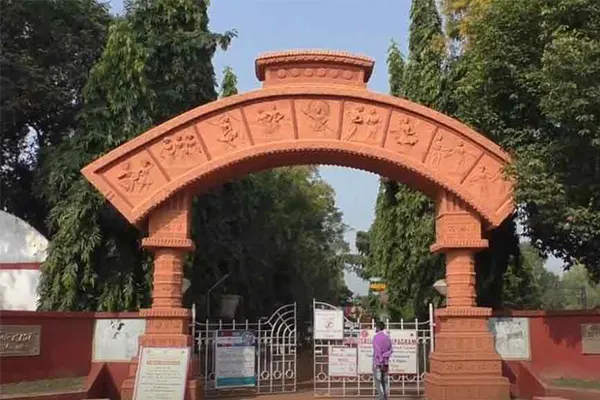
Srijani Shilpagram in Santiniketan is an EZCC (Eastern Zonal Cultural Centre) craft-and-culture village that showcases the folk and tribal arts of India’s eastern and northeastern states. Spread across landscaped grounds with life-size traditional huts, it hosts artisan workshops, permanent craft stalls, small museums/galleries, and an open-air amphitheatre for weekend performances and festivals. Visitors can watch makers at work, pick up handcrafts (dokra, kantha, bamboo/shola, masks), and stroll shaded pathways—making it a relaxed, hands-on window into living heritage near Bolpur.
- 4.7 km from Abhilasha
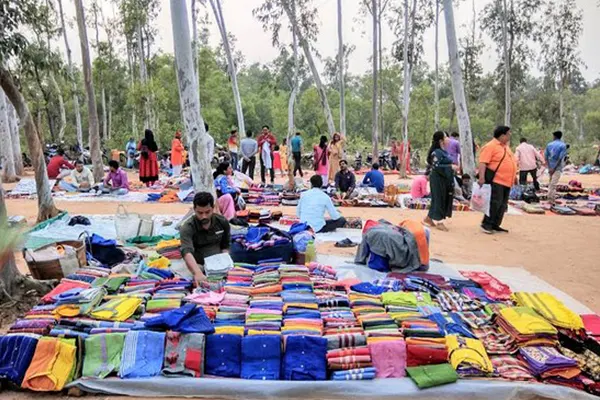
Sonajhuri Haat—also called the Khoai Haat—is a vibrant open-air weekend market set among sal and sonajhuri trees near Santiniketan’s red khoai ravines. Local artisans spread out cloth mats to sell dokra metalwork, kantha, batik, terracotta, bamboo/shola crafts, beads and handloom. The atmosphere turns festive on Saturday afternoons, with baul and folk music, impromptu dance, and street snacks. Come with small cash, bargain politely, and enjoy a slow walk through art, songs, and the rust-gold countryside
- 2 km from Abhilasha
Kalikapur Rajbari is a heritage zamindar mansion in Kalikapur village, just a couple of kilometres from Bolpur–Santiniketan, known for its quiet courtyard and a cluster of nearby temples that make a lovely add-on to the Surul/Supur terracotta-temple circuit. Visitors come for the old-world architecture, carved details, and the rural ambience—an easy half-day heritage walk from Santiniketan
- 3 km from Abhilasha
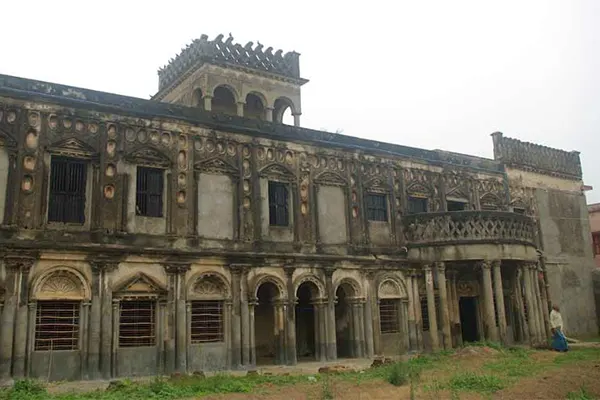
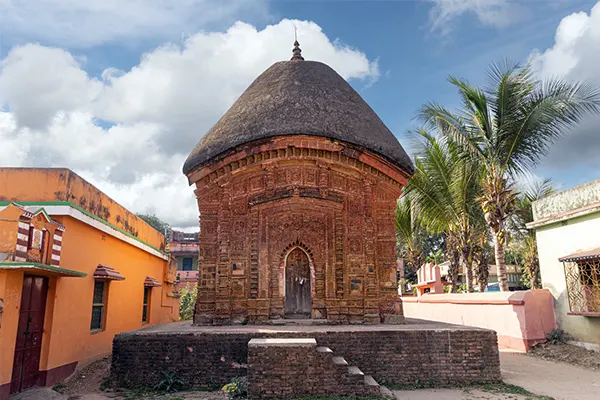
Ghurisha Terracotta Temple—in a quiet Birbhum village a short drive from Santiniketan—showcases classic Bengal at-chala/char-chala temple architecture faced with rich terracotta panels. Its baked-clay reliefs typically depict Krishna-lila, Ramayana scenes, deities, dancers, hunters, and everyday village life, giving a warm, rust-red glow at sunset. Still an active place of worship, it’s a serene stop on the Santiniketan terracotta trail (with Surul, Supur, etc.), best visited in the cooler months when details are easiest to admire.
- 20 km from Abhilasha
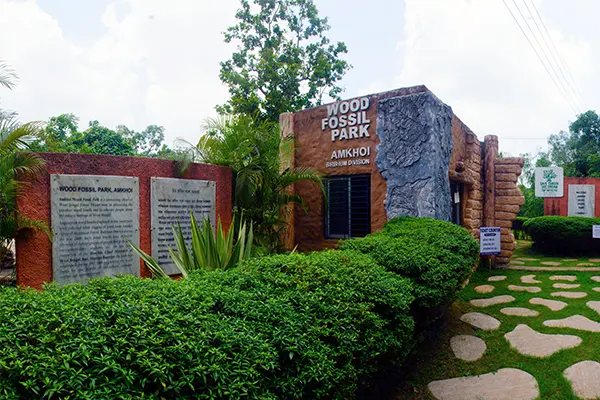
Amkhoi Wood Fossil Park (Birbhum), a short drive from Santiniketan near Illambazar, preserves striking petrified tree trunks—millions of years old—unearthed during local pond excavation. Set in lateritic red earth with simple trails and interpretive boards, the open-air park explains how living trees turned to stone and why such fossils are found in this region. It’s a calm, educational stop for nature and geology lovers, easy to pair with Sonajhuri/Khoai and the Kopai countryside
- 17 km from Abhilasha
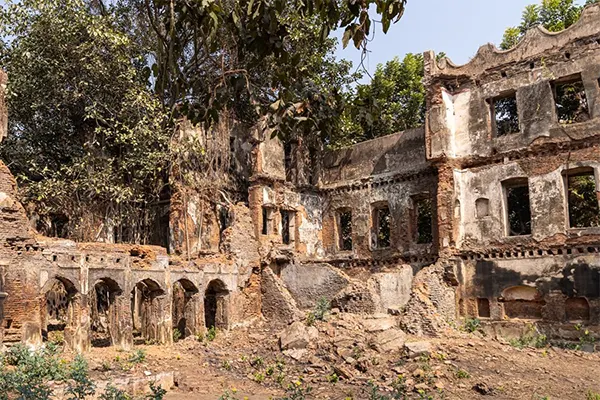
Raipur Zamindar Bari in Raipur village near Bolpur–Santiniketan—is a quiet, late-zamindari mansion with a central courtyard and traditional thākur-dalān (ritual pavilion) where annual pujas and community gatherings still take place. Visitors come for the old-world brickwork, arched verandas, and rural ambience set amid Birbhum’s red-earth landscape; it pairs well with nearby terracotta-temple and khoai countryside loops for a half-day heritage stroll. Rabindranath’s family had a close relationship with the zamindar of Raipur. Rabindranath Tagore’s father bought land from the Raipur Zamindar to construct the Biswa Bharati Ashram
- 10 km from Abhilasha
Sriniketan—Visva-Bharati’s rural wing, about 3 km from Santiniketan—was envisioned by Rabindranath Tagore and launched in 1922 under Leonard Elmhirst to pioneer rural reconstruction. Centered on institutes like Siksha-Satra and Palli-Samgathana Vibhaga, it works on agriculture, crafts, cooperatives, health, education, and community self-help. The campus landscape of fields, workshops, and training centres reflects Tagore’s idea that the university should serve village life—linking learning with livelihoods and dignity of labour.
- 5 km from Abhilasha